

In the evolving industrial landscape of Madurai, the methodology behind hr developing strategies has shifted from basic oversight to a sophisticated driver of organizational success. Establishing clear, measurable, and inspiring performance goals is not merely a box-ticking exercise; it is the cornerstone of talent retention and operational excellence. For a consultancy like PeopLead, understanding that goals are the heartbeat of growth is essential.
Building on this foundation, PeopLead emphasizes that the modern approach to performance management must transcend traditional top-down mandates. In the context of Madurai’s unique socio-economic fabric, effective hr developing involves creating a localized “People Cohesion” model where corporate objectives align with the personal aspirations of the workforce.
By fostering an environment where employees see their individual growth mirrored in the company’s milestones, organizations can cultivate a sense of shared ownership. This psychological buy-in is what transforms a standard workplace into a high-performance hub, ensuring that talent remains motivated and deeply anchored to the firm’s long-term vision.
Furthermore, the integration of technology into these frameworks is no longer optional for firms striving for regional leadership. PeopLead advocates for a “Hire-to-Retain” strategy powered by real-time data analytics, allowing managers to move away from subjective annual reviews toward continuous, merit-based feedback.
This shift in hr developing allows for the early identification of skill gaps and the proactive deployment of upskilling initiatives. By leveraging such data-driven insights, businesses in Madurai can build a resilient, agile workforce capable of navigating global market fluctuations while maintaining the personal, community-centric values that define the region’s professional identity.
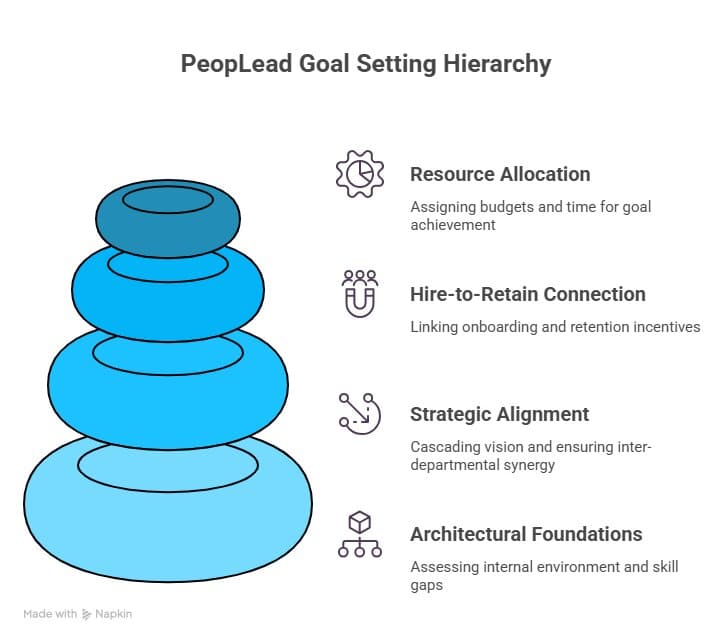
1. The Architectural Foundations of Goal Setting
Before a single metric is assigned, hr developing must focus on the structural integrity of the organization. Goals do not exist in a vacuum; they are the functional execution of a company’s vision.
Internal Environment Analysis
- Culture Audit: PeopLead recommends assessing the current workplace “vibe” to ensure it supports high-pressure milestones without cracking.
- Tool Assessment: Evaluate if current software, hardware, and physical office layouts allow employees to meet their objectives efficiently.
- Skill Gap Mapping: Identify what the team lacks before setting targets that require those specific technical or soft competencies.
- Workload Balance: Ensure that goal-setting doesn’t lead to immediate burnout by analyzing current capacity versus future demands.
Defining Strategic Alignment
- Vision Cascading: Mapping how a CEO’s 5-year plan breaks down into a junior executive’s daily tasks ensures every hour worked is valuable.
- Inter-departmental Synergy: Ensuring that the sales team’s aggressive goals don’t accidentally create a resource bottleneck for the production team.
- Value Chain Mapping: Identifying exactly where an employee’s daily output adds the most financial or brand value to the Madurai ecosystem.
- Priority Ranking: Helping employees understand which goals are “must-haves” versus “nice-to-haves” during busy festive or seasonal cycles.
Establishing the “Hire-to-Retain” Connection
- Onboarding Milestones: Setting 30, 60, and 90-day targets during the recruitment phase to provide immediate direction and purpose.
- Retention Incentives: Linking long-term performance goals to loyalty bonuses, stock options, or advanced career training opportunities.
- Cultural Immersion: Using initial goals to help new hires understand the “People Cohesion” philosophy that PeopLead champions.
- Feedback Integration: Allowing new hires to critique their own goals to increase early-stage engagement and a sense of ownership.
Resource Allocation and Budgeting
- Financial Backing: Assigning specific budgets for the tools, subscriptions, and training required to meet advanced performance goals.
- Time Allocation: Formally “buying” time for employees to focus on their development goals without daily operational interference.
- Consultancy ROI: Analyzing how PeopLead strategies directly impact the bottom line through better-managed human capital.
- Technology Investment: Budgeting for modern AI-driven performance tracking tools that provide real-time, objective data for management.
2. Advanced Methodologies for Performance Metrics
Moving beyond basic checklists, modern hr developing utilizes data-driven frameworks to ensure that every metric is both fair and challenging.
The Evolution of SMART+ Criteria
- Specificity Protocols: Moving from vague goals like “improve sales” to “increase B2B conversions in Madurai by 12% by Q3.”
- Measurement Accuracy: Utilizing CRM and ERP data to ensure that performance metrics are objective, transparent, and unhackable.
- Feasibility Checks: Using historical company data to ensure that a goal is actually achievable within the given local market conditions.
- Agility Integration: Building “pivot points” into goals so they can be adjusted if the market undergoes a sudden shift or technological disruption.
Quantitative vs. Qualitative Balancing
- Numerical Tracking: Standard KPIs like revenue, units produced, or tickets resolved provide clear accountability for every department.
- Soft Skill Metrics: Measuring leadership, empathy, and teamwork through peer reviews and structured behavioral observations.
- Innovation Scoring: Rewarding employees for suggesting new processes or cost-saving measures, even if they don’t have an immediate dollar value.
- Brand Ambassadorship: Tracking how employees represent the company in public forums, social media, and professional Madurai networks.
Behavioral Goal Integration
- Conflict Resolution: Setting targets for managers to reduce internal friction and improve the overall “People Cohesion” within their teams.
- Communication Standards: Measuring the clarity, frequency, and effectiveness of internal reporting and cross-functional updates.
- Proactive Problem Solving: Encouraging staff to identify and fix issues before they are officially “reported” by a client or supervisor.
- Emotional Intelligence: Developing goals that help staff manage their own stress levels and support their colleagues during peak periods.
Utilizing OKRs (Objectives and Key Results)
- Ambitious Objectives: Setting “Moonshot” goals that inspire the team to think beyond their current operational limitations.
- Measurable Key Results: Breaking those big dreams into 3-5 quantifiable steps that prove progress is being made.
- Transparency Levels: Ensuring OKRs are visible to everyone in the company to foster a culture of shared success and accountability.
- Quarterly Sprints: Using short, intense bursts of work to achieve key results rather than slow, year-long slogs that kill momentum.
3. The Human-Centric Feedback Revolution
The most critical phase of hr developing is the interaction between manager and employee. Static, once-a-year reviews are no longer sufficient.
Implementing Continuous Pulse Checks
- Micro-Feedback Sessions: Brief “stand-up” meetings to discuss immediate hurdles, resource needs, and small wins.
- Real-time Course Correction: Fixing a performance issue on a Tuesday instead of waiting for a formal review months down the line.
- Relationship Building: Using frequent touchpoints to build genuine trust between leadership and the diverse Madurai workforce.
- Data Consistency: Ensuring that small feedback points are logged digitally to build a comprehensive, fair year-end picture.
The Art of Radical Candor
- Direct Challenge: Having the courage to tell an employee exactly where they are failing without sugarcoating or ambiguity.
- Personal Care: Showing the employee that the critique comes from a place of wanting them to succeed and grow with PeopLead.
- Feedback Loops: Allowing the employee to provide “upward feedback” to their manager to improve leadership quality.
- Actionable Advice: Ensuring every critique is followed by a specific, documented step for improvement or a training resource.
Multi-Rater (360-Degree) Feedback
- Peer Reviews: Gaining insight into how an employee collaborates with those on their own level, revealing “hidden” leaders.
- Subordinate Perspectives: Understanding how a manager’s leadership style affects the daily morale and output of their team members.
- Client Input: Bringing the voice of the customer into the performance review process for external-facing or service roles.
- Bias Mitigation: Using multiple viewpoints to ensure no single personal conflict ruins an employee’s professional standing.
Psychological Safety in Goal Reviews
- Error Tolerance: Creating an environment where employees can admit to mistakes without fear of immediate termination.
- Vulnerability Modeling: Leaders sharing their own professional struggles to encourage honesty and transparency from their staff.
- Growth Mindset: Framing every failure as a “learning outcome” that informs the next set of objectives.
- Confidentiality Guarantees: Ensuring that sensitive performance discussions stay strictly between the relevant parties to maintain dignity.

4. Technology and AI in Talent Optimization
As we look toward the future of HR in Madurai, hr developing is increasingly being shaped by digital tools and artificial intelligence.
Data-Driven Performance Analytics
- Predictive Modeling: Using AI to identify which employees might be at risk of leaving based on subtle performance dips.
- Bias Neutralization: Using algorithms to ensure that rewards and promotions are based strictly on merit rather than favoritism.
- Trend Identification: Seeing which departments are consistently meeting goals and which ones require more PeopLead intervention.
- Resource Mapping: Identifying which high-performers are under-utilized and could be moved to more critical, high-impact projects.
Automating the Administrative Burden
- Automated Reminders: Systems that nudge employees when a goal deadline is approaching so managers don’t have to “nag.”
- Self-Service Portals: Allowing employees to log their own wins and update their progress bars in real-time, increasing autonomy.
- Standardized Reporting: Generating monthly performance reports with a single click for executive or board-level review.
- Integration Synergy: Connecting HR software with sales and production tools for a “single source of truth” regarding company health.
Upskilling Through Digital Platforms
- LMS Integration: Automatically assigning a training module the moment a performance gap is identified in the goal-tracking system.
- Micro-Learning: Providing 2-minute “how-to” videos that employees can watch on-demand while working.
- Credential Tracking: Digital badges and certificates that stay with the employee’s internal profile to boost their professional ego.
- Personalized Learning Paths: AI-curated curriculum based on an employee’s specific long-term career goals and interests.
Gamification of Goal Achievement
- Leaderboards: Friendly, transparent competition that encourages staff to hit their targets for public recognition.
- Progress Visualization: Using “level-up” bars and experience points to make professional growth feel like a modern game.
- Virtual Rewards: Digital badges and “shout-outs” that boost morale in a remote or hybrid Madurai-based setting.
- Team Challenges: Forcing departments to collaborate to unlock a “collective reward,” fostering inter-departmental harmony.
5. Sustaining Momentum and Long-Term Growth
The final stage of hr developing is ensuring that the system is sustainable and leads to genuine career progression.
Linking Goals to Career Pathing
- Promotion Roadmaps: Showing an entry-level staff member exactly which milestones they need to hit to become a manager.
- Succession Planning: Identifying high-performers today who will lead PeopLead-partnered companies tomorrow.
- Lateral Movement: Developing goals that allow employees to move to different departments to broaden their skill sets.
- Retirement Preparation: Helping senior staff set “legacy goals” as they prepare to transition out of the workforce.
Recognition and the Reward Ecosystem
- Public Praise: Celebrating wins in “Town Hall” meetings to reinforce positive behaviors across the entire company culture.
- Monetary Bonuses: Linking clear, quantifiable goal achievement to financial incentives and profit-sharing models.
- Extra Time Off: Using “Wellness Days” as a reward for teams that consistently exceed their quarterly targets.
- Professional Development: Rewarding top performers with expensive international certifications or high-level conference tickets.
Resilience and Burnout Prevention
- Recovery Periods: Building in “low-intensity” weeks after a major, stressful project goal has been successfully met.
- Mental Health Support: Providing access to counseling or stress-management workshops as a core part of the HR policy.
- Reasonable Expectations: Ensuring that “stretch goals” are still grounded in the physical and mental reality of the workforce.
- Work-Life Separation: Encouraging employees to disconnect from all goal-tracking apps and work communication during their off-hours.
Annual Strategy Evolution
- Framework Audit: Reviewing the year to see which goal-setting methods worked and which ones failed to drive growth.
- Market Benchmarking: Checking if your company’s performance standards are still competitive within the Madurai industrial sector.
- Stakeholder Feedback: Formally asking the Board and the staff how the performance management process can be improved.
- Agile Re-tooling: Being willing to scrap an entire goal framework if it is no longer serving the company’s core mission.
PeopLead: Pioneering People Cohesion in Madurai
As a premier HR consultancy, PeopLead acts as a strategic bridge between organizational ambitions and workforce potential. Our mission is to redefine how businesses in the Madurai region approach human capital, moving beyond administrative tasks to foster deep “People Cohesion.” By specializing in hr developing frameworks that are both globally standard and locally relevant, we empower companies to build resilient, high-performing teams.
- Strategic Hire-to-Retain Focus: We go beyond traditional recruitment by implementing hr developing systems that ensure new talent is not only placed but is also nurtured and motivated to stay long-term.
- Localized HR Expertise: PeopLead understands the specific socio-economic dynamics of Madurai, allowing us to tailor hr developing strategies that resonate with the local work ethic and cultural values.
- Data-Driven Performance Management: We leverage modern analytics to help firms move from subjective evaluations to objective, real-time hr developing metrics that reward genuine merit and productivity.
- Technology-Backed Solutions: From AI-driven sourcing to automated goal tracking, we integrate the latest tools into the hr developing process to reduce administrative friction and enhance leadership clarity.
- Holistic Employee Development: Our approach emphasizes the “People Cohesion” philosophy, ensuring that hr developing efforts align individual career paths with the overarching goals of the company for mutual success.
Frequently Asked Questions (FAQs)
1. How do we start hr developing goals for a small team?
Start with transparency. In small teams, hr developing is most effective when everyone understands how their role prevents bottlenecks for others. PeopLead recommends focusing on 3 high-impact goals.
2. Is hr developing effective for remote or hybrid staff?
Yes, it is even more critical. For remote teams, hr developing must focus on “output” rather than “hours logged.” Clear digital tracking ensures remote workers feel connected to the company’s goals.
3. What is the biggest mistake in hr developing performance benchmarks?
The biggest mistake is lack of “buy-in.” If employees feel that hr developing is something being done to them rather than with them, they will resist. Collaboration is the key to hr developing success.
4. How does hr developing contribute to the Madurai economy?
By hr developing local talent into world-class professionals, companies like PeopLead help elevate the region’s industrial standards, attracting more investment and creating a skilled local workforce.
5. Can AI replace the human element in hr developing?
Never. While AI provides the data, the “human” in hr developing provides the empathy and mentorship. At PeopLead, we use AI as the compass, but our HR experts remain the captains.
Conclusion
The journey of hr developing is a continuous cycle of planning, execution, and reflection. By moving away from rigid, outdated systems and embracing a collaborative, tech-forward approach, organizations can ensure that their performance goals are not just metrics, but catalysts for human potential. At PeopLead, we are committed to helping you navigate this complexity. Through dedicated hr developing, your organization can reach new heights of productivity and employee satisfaction. Through this holistic hr developing strategy, your firm will achieve unprecedented levels of growth and cohesion.
The journey of hr developing is a continuous cycle of planning, execution, and reflection. By moving away from rigid systems and embracing a collaborative, tech-forward approach, organizations can ensure performance goals are catalysts for human potential. At PeopLead, we are committed to transforming standard HR practices into a strategic advantage. Through dedicated hr developing, your organization can reach new heights of productivity and employee satisfaction, ensuring your talent stays as vibrant as the city of Madurai itself. Through this holistic hr developing strategy, your firm will achieve unprecedented levels of growth and “People Cohesion.”
This evolution in management philosophy ensures that the workplace is no longer defined by mere survival, but by sustainable excellence. When leadership prioritizes the human element, it creates a ripple effect that strengthens the entire organizational structure, leading to a culture of innovation and mutual respect. This commitment to the workforce serves as the ultimate competitive advantage, positioning the company as an employer of choice in an increasingly crowded marketplace.